- en
Iain Mackay
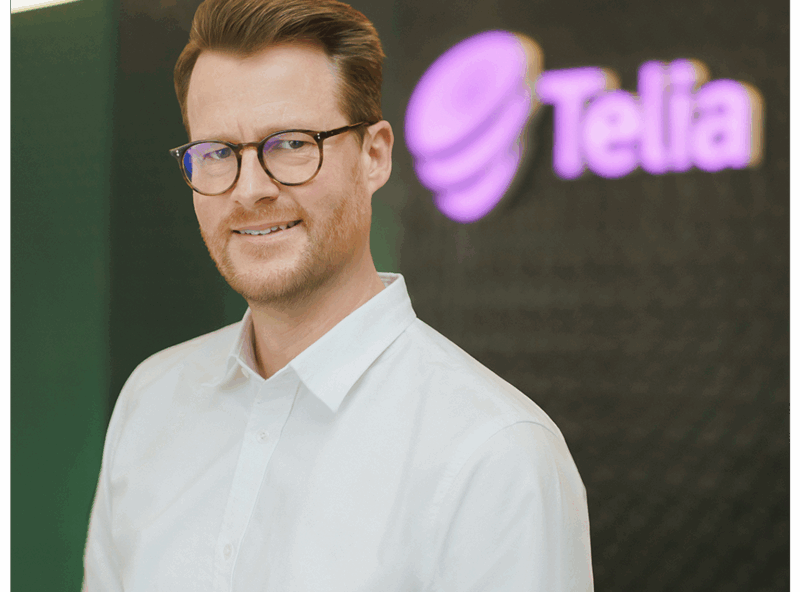
Iain Mackay came to Lithuania by pure accident – a last-minute study exchange swap that traded Californian surf for a cold Vilnius winter. Nearly 20 years later, he heads the Equipment Business at Telia Lithuania, leads a team of managers, and has built a career that spans consumer goods, advertising, manufacturing, and telecoms – all without leaving the country. We sat down with Iain to talk about seizing opportunities, building a life in Vilnius, and why the people who come here never seem to want to leave.
You ended up in Lithuania almost by accident. What happened?
The short version is: life happens when you’re planning for something else. I was actually applying to study in San Diego, but absolutely everything that could go wrong did go wrong. My university in Rotterdam gave me three other choices for my study exchange: Glasgow, Brussels, or Vilnius. Brussels was off the table immediately – it’s right next door to the Netherlands, so going there wouldn’t have been very interesting. Glasgow didn’t have the right curriculum for my criminology degree. So I literally ended up with Lithuania. I went from expecting surf and waves in California to negative 26 degrees at Mykolas Romeris University in January 2006.
Back then, it was not the obvious choice – very much acknowledged by Lithuanians themselves, who kept asking, “Why are you here? What are you doing here?”

What made you stay?
The Erasmus exchange experience itself was incredible. There were students from France, Italy, Portugal – one big happy family, and it was all superbly organised by the local university. They assigned us student mentors, and helped with visas, bank accounts, all the basics. I should mention – one of those mentors is now my wife. That was definitely not planned either.
But a big reason I came back was a feeling. I felt great here, and I thought: why don’t other people know about this place? Why isn’t Lithuania on the map? The vibe here was positive – it was a country in the middle of change, and you could feel the energy. I actually started my own company while still studying: a small media business selling advertising space in bar and club bathrooms. As a student, I was going out quite a lot, so I knew the venues. A couple of Dutch investors came on board. Between the relationship, the feeling I had about the city, and a business to run, there was no real reason to go back.
Your career has taken you across very different industries – from that media startup to Nestlé, advertising, manufacturing, and now telecoms. How has that path unfolded?
Opportunity, and chasing opportunity. The media company didn’t survive the 2008 financial crisis. I was seriously considering going back to the Netherlands, but by then I was in a relationship, and my wife had started her legal career – law is very much tied to local language and local jurisdiction. So we were on opposite sides of the spectrum in terms of mobility.
Then Nestlé came along, looking for a brand manager to launch a new coffee concept in the Baltics – my first proper corporate role here. From there I moved to an advertising agency, then to Baltik Vairas, the historical bicycle manufacturer in Šiauliai, which had been acquired by a private equity firm and needed a complete reset. That was a real zero-to-hero story, but with a growing family in Vilnius, I eventually wanted something closer to home. A brief stint in cosmetics, and then the opportunity at Telia came along. The role is basically the culmination of everything I’ve done – it requires entrepreneurship, strategic thinking, process discipline from manufacturing, and a strong network.

What does your current role at Telia involve?
I head the Equipment Business unit. In simple terms, Telia is a service company, but the services don’t work without the right equipment. I lead a team of category managers, and together we determine the product portfolio – mobile phones, headphones, smartwatches, accessories, TVs, sound bars – decide which brands to carry, set the pricing, and design the commercial offers for consumers. We also handle competitor monitoring, vendor management, and work closely with marketing on campaign planning.
The ultimate goal is not really to sell devices – the equipment is the tool that drives subscriptions to Telia’s services. But I like to think we make the services a bit more exciting, because a SIM card is just a SIM card until you put it in a great phone and suddenly you’re video-calling family abroad and staying connected with your whole network.
What would you tell an international professional considering a long-term career in Lithuania?
Let’s be blunt: whether you make it somewhere doesn’t depend on the country. It depends on you as an individual. Vilnius is a totally modern, open city. Whatever you want to achieve, you can achieve it here. I’ve been through the waves – the 2008 crisis hit, I was struggling to find a job, and I started thinking Lithuania was the problem. But it had nothing to do with the country. Once you get past that, it really comes down to a glass-half-full or glass-half-empty mentality.
What I would say is that Lithuania offers an exceptional work-life balance. What I don’t have in the Netherlands is space, nature, and the freedom to go where I want, when I want. In the Netherlands, everything is planned and programmed – you’re always surrounded by crowds. The sense of freedom I have here is far greater than what people experience back home.
The whole world is digital now, so your geographic pinpoint on the map becomes less and less relevant. Lithuania is a fully integrated European country with absolutely all the amenities you’d have in Western Europe. What you do with them is up to you.
What’s the reaction you see from other foreigners when they arrive in Lithuania?
The people I know who live here – whether they came for a job, a mission, or a diplomatic posting – all have the same reaction: “I didn’t expect this. Now I don’t want to leave.” That’s it, in a nutshell. Lithuania has a way of surprising people, and that’s actually a huge strength. The country as a brand still has all the room in the world to grow, and the impression it leaves is overwhelmingly positive. If you have an opportunity to come, come experience it.
You speak Lithuanian. Do you think learning the language is a must?
There are two sides to this. If you’re thinking of being here for a few years, you absolutely don’t need it. Everyone speaks English. That’s been one of the huge changes since I arrived – back in 2006, people lacked the confidence to speak English; now it’s completely natural and fluent.
But once I’ve decided to settle here, I felt I had to learn to understand the people around me better. I made the choice that I want to be part of the conversation. Now I understand Lithuanian well, and depending on how lazy I’m feeling, I respond in English or in Lithuanian. It becomes this totally fluid mix, and I love it – it shows how naturally people from different nationalities can interact with each other.

You’ve been here nearly 20 years. How has Lithuania changed? What still surprises people?
The speed of development, hands down. My father visits regularly, and every single time he says the same thing: “Every time I leave and come back, it’s not the same country.” The airport renovation is one recent example – everything is an improvement. And I think that’s what I love the most: every change is a positive change, building the country and the economy, creating more opportunities, making it more international.
But the biggest change, for me, is in Lithuanians themselves. Back in 2006, people had this mindset rooted in what you cannot do – understandable, given the weight of Soviet history. I grew up in the Netherlands, where you’re raised to think about what you can do. When I first arrived and told people I was from the Netherlands, the reaction was, “Why on earth are you here?” Now it’s just, “Oh, you’re Dutch – so what?” And I absolutely love that shift.