- en
Aidos Alimkhan
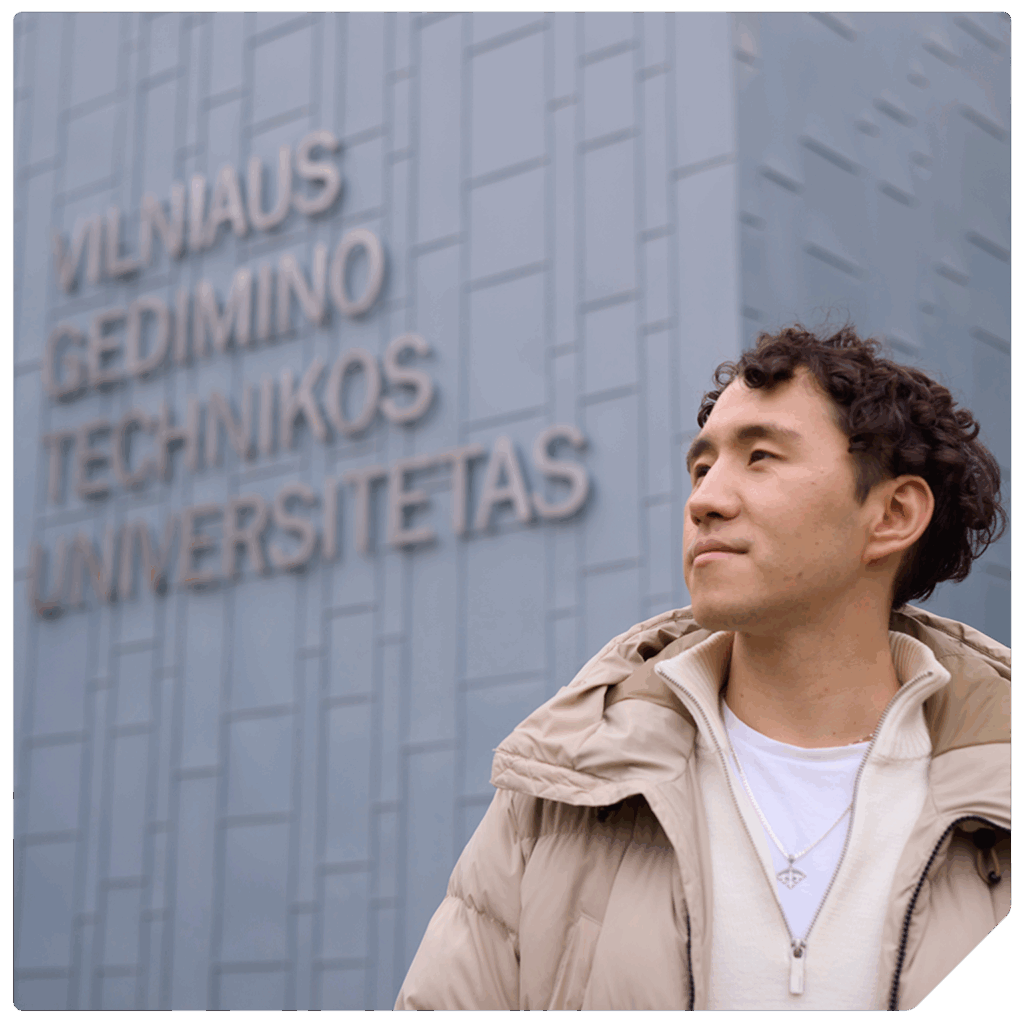
Aidos Alimkhan came to Lithuania from Almaty, Kazakhstan, as a scholarship student at VILNIUS TECH. After discovering Android development during his studies, he progressed from intern to middle-senior developer in just over three years. Today, he works at Shift4, building payment solutions for businesses around the world. Outside work, Aidos has found another passion in Vilnius: bachata, which he now teaches.

Lithuania is a great destination if you want to grow professionally.
You came to Lithuania as a student. What made you choose it over other options?
I was considering a few places – Hong Kong, Germany, even the US – but the cost of living and the difficulty of getting a visa made those options a little bit complicated and not so appealing. Lithuania stood out for a few reasons. First, Vilnius Tech offered me free tuition, which was a huge win. Second, the cost of living was very reasonable. And third, it’s Europe – a developed country where I knew I’d be able to travel and build a real career. Once I looked into Vilnius Tech and saw it was one of the top universities in Lithuania, the decision was pretty much made.
How did you end up specialising in Android development?
I’ve been into IT and software engineering since high school. I was always going to study in this field. But my interest in Android came later – during my studies at Vilnius Tech, one of my professors gave us an Android project, and I was hooked. When it came time to do an internship, it made sense to lean into something I already had some practical knowledge of. I found an internship in Almaty over the summer, and that gave me the foundation I needed to go after a junior developer role when I returned to Lithuania.
How quickly did your career develop from there?
I got my first job here in Lithuania as a junior developer and stayed with that company for three years. It was a smaller company, which actually worked in my favour – I had more responsibility from early on and had to get across a lot of different areas quite quickly. That accelerated my development. Most people take around five years to move from junior to mid-senior level; I did it in just over three. After that, Shift4 came calling. They’re an American company with a clear career ladder and real growth opportunities, which is what attracted me.
You’ve mentioned the difference in working conditions between Kazakhstan and Lithuania. Can you expand on that?
The working conditions here are simply better. Strong regulations are in place, with minimum salary protections and a real culture of work-life balance. In Kazakhstan – and Almaty is a very competitive city of two million people – the expectations placed on you are often high, even if the pay doesn’t really reflect that. Here, there’s a shortage of skilled tech professionals, which means you’re genuinely valued. The pay is better, the conditions are better, and there’s far less pressure to work all hours. My current employer, Shift4, lets us work in a hybrid model, and there’s no micromanagement.

How was the practical side of relocating – accommodation, paperwork, settling in?
When I first arrived as a student, life was modest – that’s just the reality of being a student. But the university provided a lot of support: there were dorms, guides, and help with documents. To get by, I tutored students in maths, physics, and informatics, which was pretty rewarding. Once I found a full-time job, though, everything changed. My quality of life improved significantly, and finding accommodation as a working professional was actually easy. I found a flat to rent on my own, without needing roommates. And my landlord was also really decent and helpful. They even registered me as a resident at the address without any fuss.
What about the Blue Card process? Did you find that difficult?
Not at all. The Blue Card process is very straightforward. All I needed was my passport. I asked my company to provide a mediation letter, and that was essentially it. The key thing is that you have to be the one to initiate it – companies generally don’t push for the Blue Card specifically, but once you ask, they’re very helpful. I’d encourage anyone in a skilled position to look into it early.
How would you describe the Android development scene in Lithuania?
It sits comfortably in the middle ground. It’s not as crowded as web development, but it’s not as niche as some emerging areas like low-level microchip development. Once you have the right skills, there’s genuine demand, and the salaries are competitive – Android developers earn well, though slightly less than iOS developers on average. There are tech summits and gatherings in Vilnius; the ecosystem is really active. In terms of sharpening your skills, the honest truth is that it largely comes down to you – your colleagues, your projects, and your own initiative. You get out what you put in.
How have you found integrating socially into Lithuanian life?
Much easier than I expected. The English level here – especially among young people – is excellent. In tech especially, Lithuanian isn’t required, and that makes integration much simpler. People might seem reserved at first, but once you get to know them, they’re warm and welcoming. I’ve never felt out of place because of my background or nationality. If anything, people were curious and interested.
I’d say that the nightlife here is great, and though people might seem cold at first, they soon open up and are super friendly. My Lithuanian friends are always laughing, saying, “We’ll make a Lithuanian of you, Aidos.” I’ve really been accepted.

You’ve also picked up a new hobby since arriving. Tell us about that.
I dance Bachata – a Latin partner dance. I saw an advertisement here in Vilnius, thought I’d give it a go, and three years on it’s become part of my life. In fact, I now teach it. It’s been a great way to meet people and stay connected outside of work.

And what about the country itself – have you had a chance to explore?
I’ve been here six years now, so yes, quite a bit. I’ve visited Klaipėda on the coast, Kaunas, the Trakai Castle – the famous spots, but also just spent a lot of time getting to know Vilnius. I like the panorama you get from buildings like the TV tower. The other thing I really appreciate is the access to nature. Summers here are so lovely, and what makes them really special is that you can hop on a bus and escape to the lake (there are like 7 or 8 close to the city). Nothing beats a morning or evening swim.
Any final thoughts for someone considering moving to Lithuania?
Lithuania is a great destination if you want to grow professionally. The Blue Card process is accessible, the tech market values skilled people, and the quality of life is genuinely high once you’re on your feet. If you’re a high-skilled individual looking for a place in Europe where you can build something real, Lithuania is absolutely worth considering.